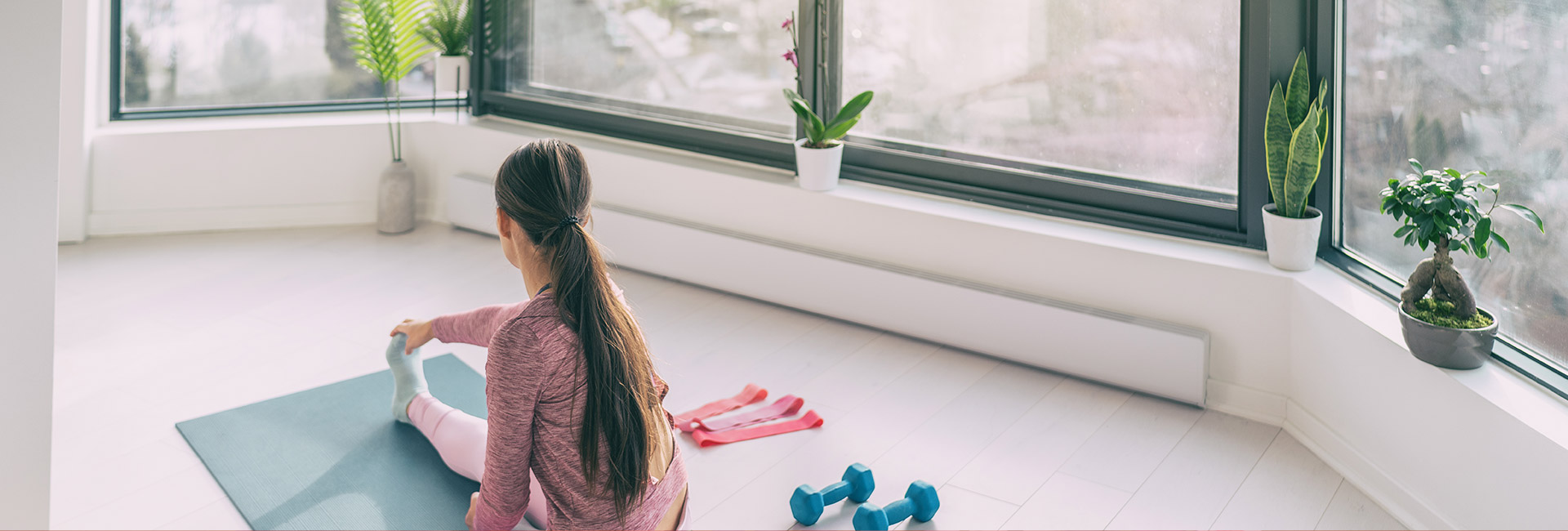

Tis the season! There is so much to be thankful for and merry about during this time of year. Spending time with family, exchanging gifts, and homecooked meals with winter treats make this my favorite season. It’s both a time for reflection and a time to set goals and prepare for the year to come.
Despite all the excitement of wintertime, living in the Pacific Northwest can make this time of year particularly challenging when trying to start or maintain a healthy workout routine. We say goodbye to the sunny, crisp, and dry fall days that make working out fun and easy, and hello to consistently grey and wet days that push us away from our outdoor activities and into the comfort of our warm and cozy homes.
The CDC recommends that adults get 150 minutes of moderate intensity cardiovascular exercise spread out over at least 3 days each week, as well as strengthening exercises for major muscle groups at least twice a week. When the weather makes it hard to log these minutes outside, it may be time to dust off the cardio equipment in the garage. If you don’t have one already, investing in a piece of cardio equipment that you enjoy (or can just tolerate) is a good idea in these situations. I am a big fan of getting my iPad set up and working up a mindless sweat while I rewatch an episode or two of Seinfeld on Netflix.
Cardiovascular Exercise
If you don’t have a home gym set up, then performing body weight exercises can be an excellent and time efficient way to workout with very little space. Grab a towel and bottle of water and give these movements a try. I recommend performing each of these moves for 20-30 seconds as you are able and then move on to the next, taking a rest break after your get through the entire circuit. Try to get through 3-4 sets.
Squat Hops
Start in a standing position with your arms down at your sides. Hop into the air with both feet while reaching yours arms up toward the ceiling. Land with bent knees and quickly spring back up into the air using momentum from your legs and arms. Try to keep your landings soft and light.
Lunge Hops
Start in a split stance with 1 leg in front and 1 leg back. Hop into the air long enough to switch legs, again landing soft. Try to limit how far your knee moves in as you land.
Skater Hops
Start in a standing position. Push off on one foot toward the opposite side and land softly on your other foot. Get low and try to tap your knee (or foot for a greater challenge) with your opposite hand. Spring back to the other side from the opposite foot, moving quickly, but with control and landing softly with each hop.
Mountain Climbers
Start in a full plank position like you are getting ready to do a push up. Keep your core engaged to minimize movement of your spine and drive your knees up one at a time toward your chest, alternating rapidly.
Running in Place
Start in a standing position. Simply act like you are running, but put more focus on driving your legs vertically. Challenge yourself to pump your legs fast, driving your knees high.
Strengthening Exercises
The primary difference in strength training vs cardio training is how the movement is performed. With strength training, the goal is to perform the exercise until it becomes difficult to continue. This will result in stress and adaptions to muscle and bone that will lead to improved strength. To maximize efficiency, strengthening exercises should involve complex, multi-joint movements that incorporate different forms of pulling, pushing, squatting, and lunging. One option is to perform 3 sets of 10-12 reps of one movement before moving on to the next.
Below I have a list of a few essential movements for strengthening major muscle groups that you can perform at home with very little equipment. All of these movements can be modified to increase or decrease intensity and difficulty.
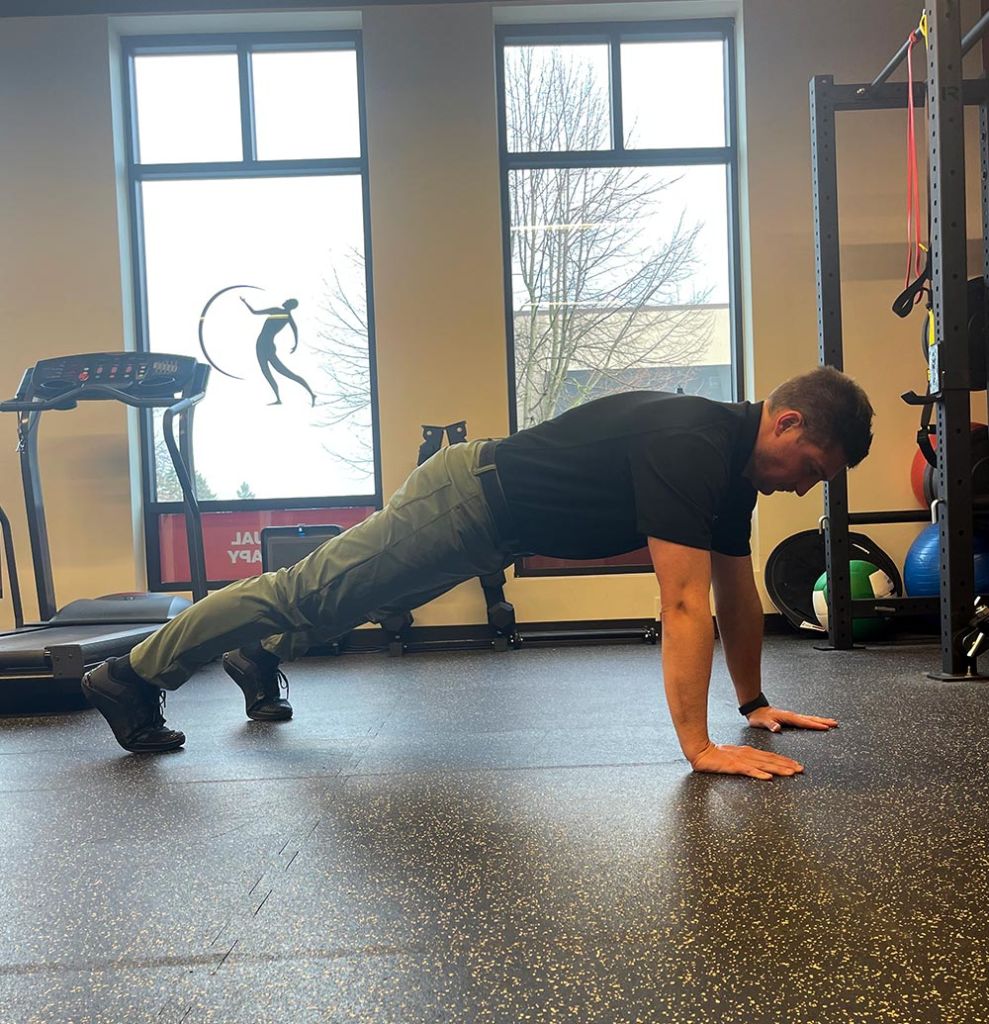
Push Ups
Keep your core engaged and your spine stiff as you lower your chest to the ground. There is nothing wrong with performing these on your knees, against a wall, or on a counter!
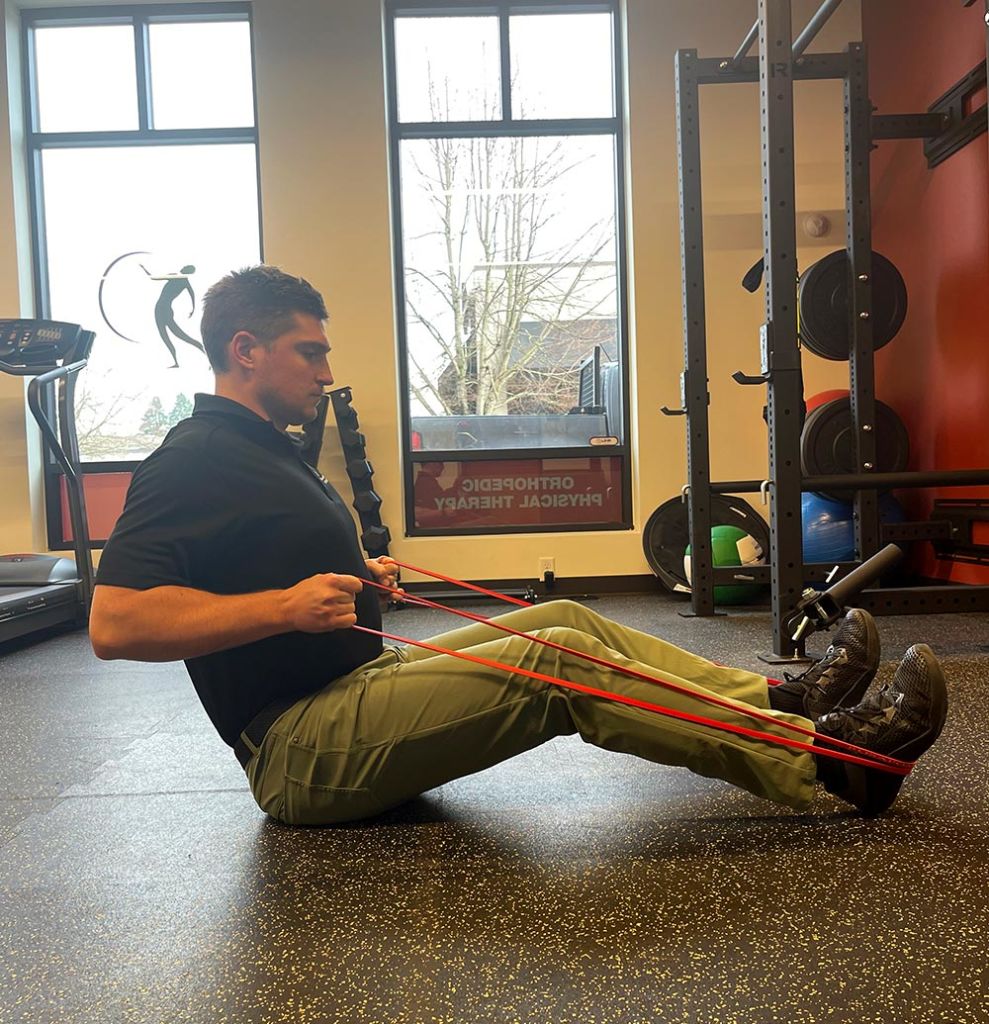
Rowing
If you have one, take a resistance band and hook it around both of your feet. Take each end of the band and pull your hands to your chest, squeezing your shoulder blades together. Try to avoid rounding your shoulders or pushing your head forward. This can also be done using dumbells.
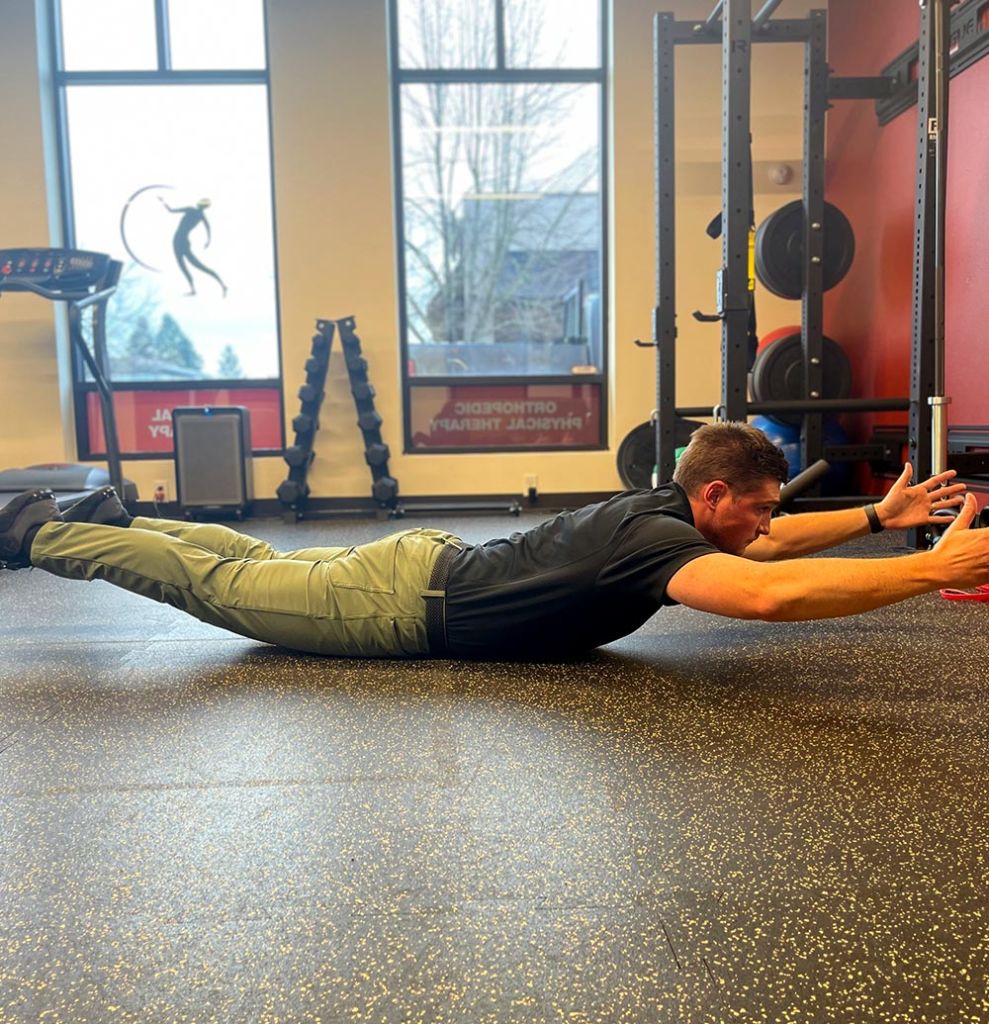
Supermans
Lie on your stomach with your arms overhead and lift everything except your stomach off the ground, holding for a second or two before relaxing back to the ground.
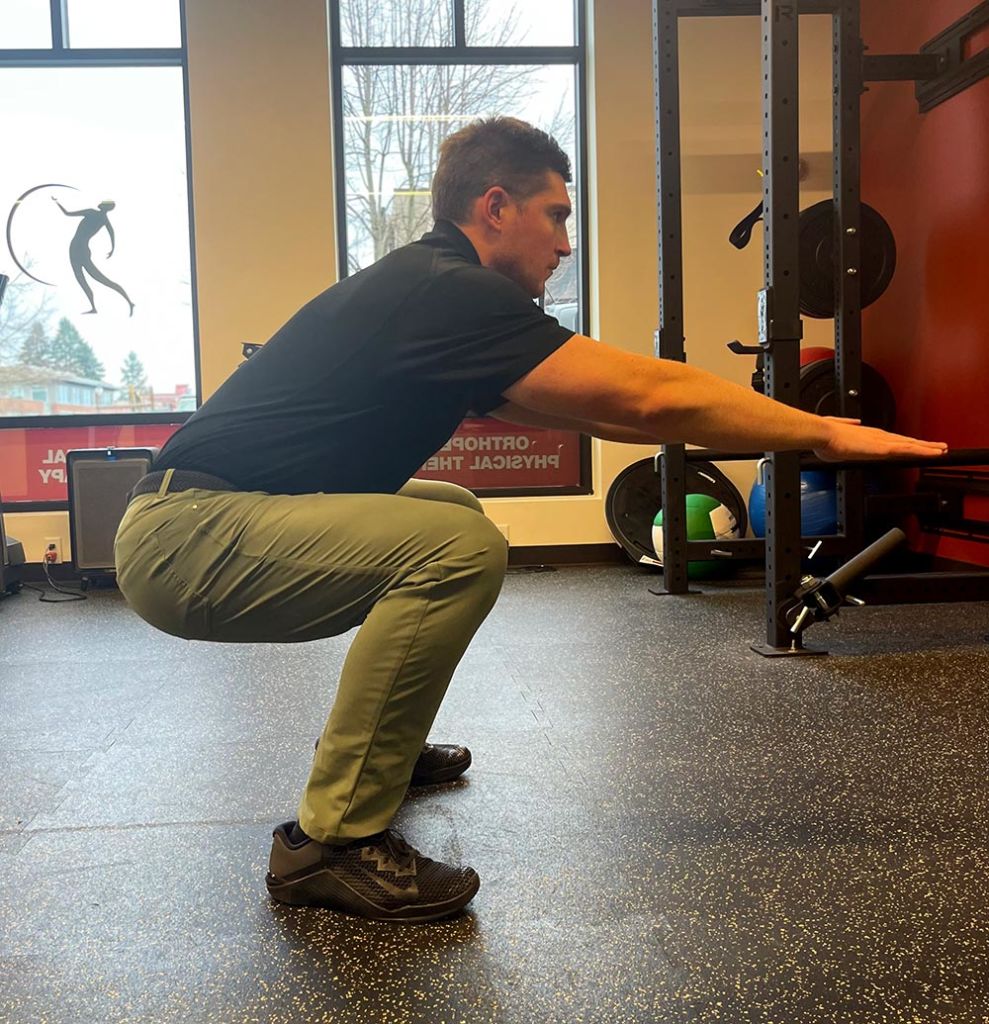
Squats
Start in a standing position with your hands in front, keep weight on your heels and get low! Squats will look different for different people, but try to keep your feet at least shoulder width apart and stick your bottom back like you are attempting to sit in a chair.
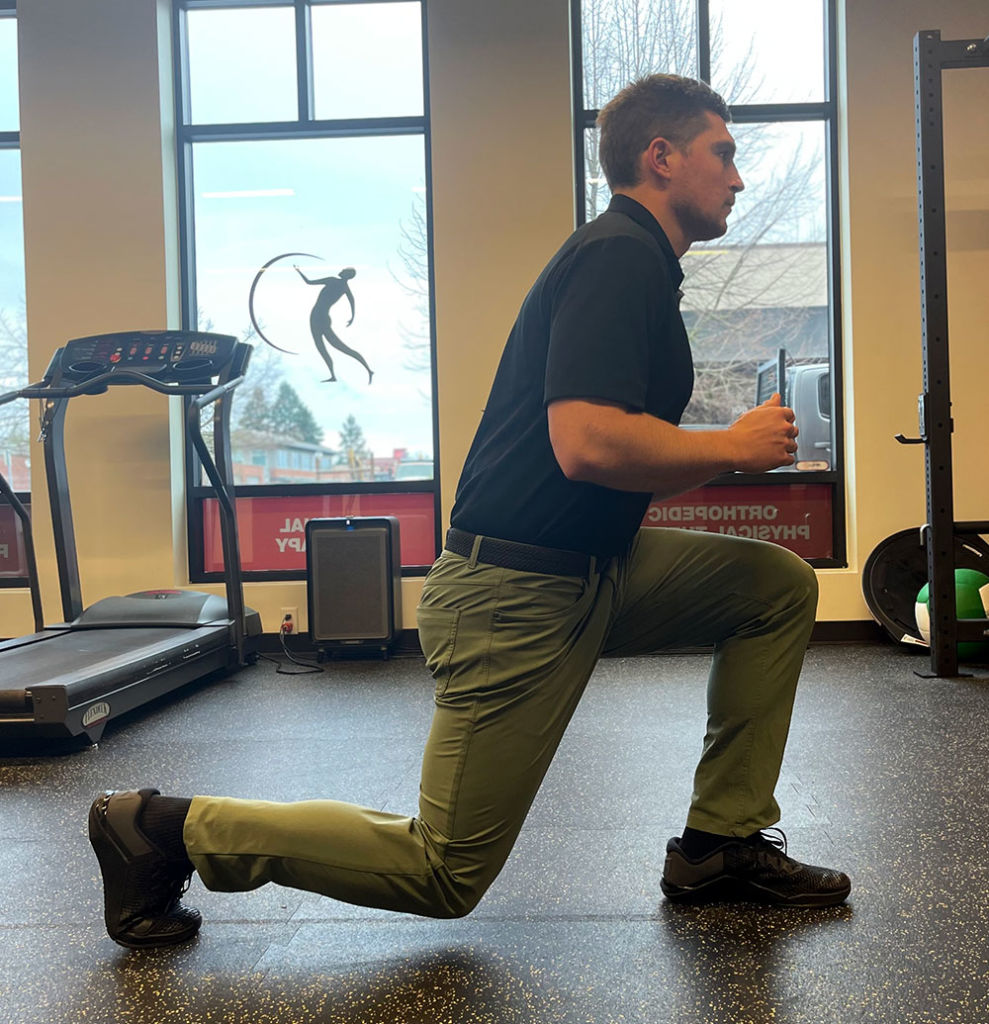
Lunges
Stand with your feet hip width apart and step forward or backward with one foot. Lower your body as you bend your knees, taking care to be sure your front knee does not go past your toes. Push off to return to starting position and repeat on the other side, alternating legs for the duration of the exercise.
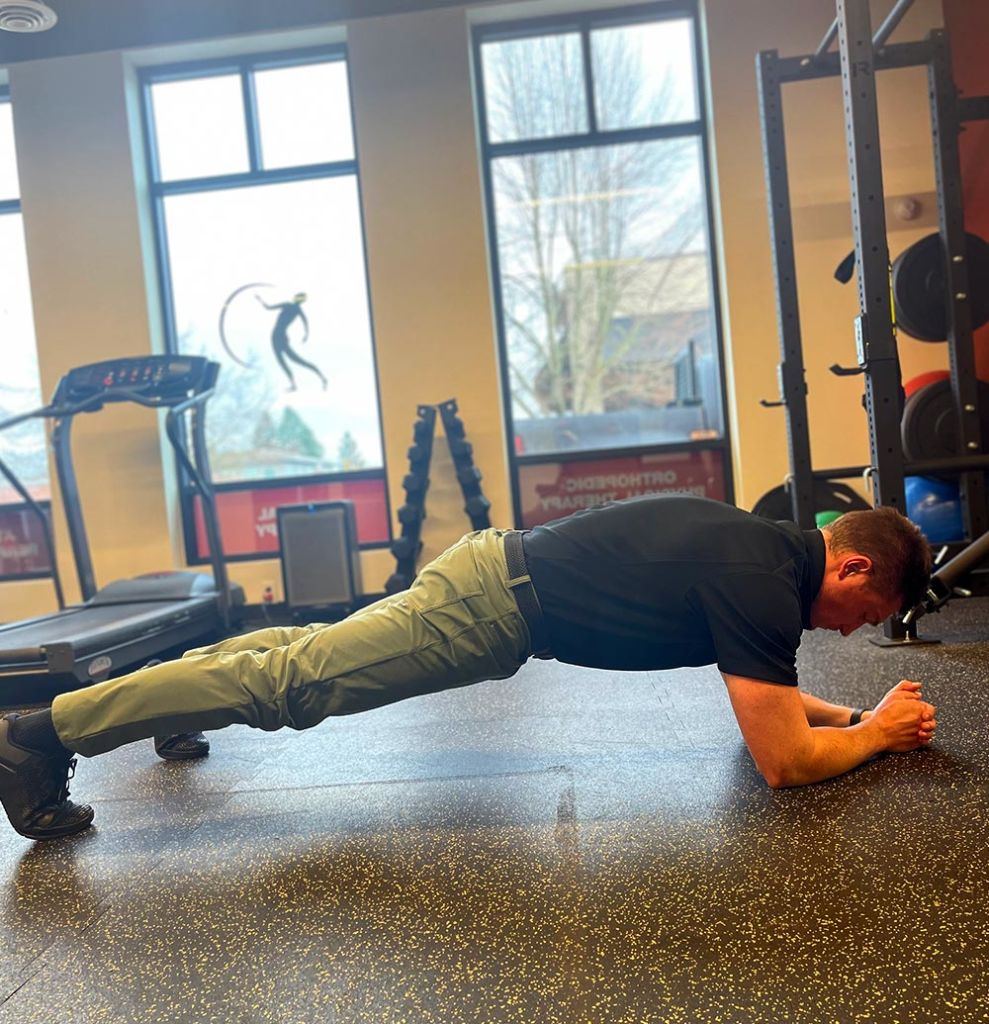
Planks
Hold your body in a pushup position resting either low on your elbows or up on your hands, keeping your back/spine straight and head/neck in line. Hold until you feel a nice muscle burn and then some!
Stretches
Low Trunk Rotation
Lie on your back, lift one knee up toward your chest and rotate to the opposite side. Try to keep both shoulders against the floor.
Posterior Hip Stretch
Lie on you back, put one ankle on the opposite knee and pull that knee to your chest until you feel a strong but tolerable stretch to the muscle on the side and back of your hip.
Child’s Pose
Position yourself on all fours with your knees wide. Rock back so your bottom moves toward your heels, keeping your hands in the same position. Hold for 30-60 seconds.
Cat/Cow
Start on all fours. Move your back like an angry cat into an arched position, and then reverse the curve in your spine and look up.
All of the above movements can be modified based on your fitness level. Throw on your favorite music to motivate you to keep your energy up throughout your routine. If you are dealing with aches, pains, or other physical limitations that are interfering with your ability to work out this winter, find a Therapeutic Associates near you and schedule an evaluation with one of our expert clinicians so that we can get you back on track.
We look forward to being a part of your healthcare team.
From injury recovery to movement and performance enhancement, patient success is our passion. Our therapists are committed to the application of evidence-based treatment techniques to ensure you experience the best in rehabilitation and preventative care and see progress with every visit.