
What is sciatica?
Sciatica is a term used by medical professionals and the general public alike to describe pain that radiates down the leg. Let’s dive into a bit more detail on the definition, the causes, and how it can be diagnosed. Sciatica is defined by the Journal of the American Medical Association (JAMA) as “the term for low back pain that radiates into the buttock, hip, and down one leg to the foot. The pain often is associated with tingling, numbness, or weakness of the leg.”1
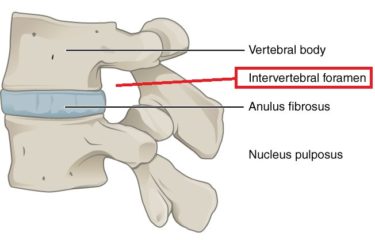
In the human body, nerves are the conduit for all information traveling back and forth between our tissues to our brain. In the case of sciatica, these nerves travel from our brain down our spinal column and then exit the spine through a space between adjacent vertebrae called the intervertebral foramen.
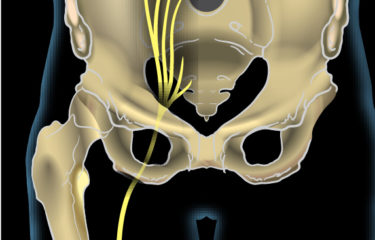
In the lumbar and sacral spine, after the nerves exit the foramen, they merge together to form the Sciatic nerve which travels down the leg to the foot.
What causes sciatica?
The term “Sciatica” is attributed to this condition because the symptoms follow the path of the Sciatic nerve. However, it is important to realize that the term “sciatica” defines a group of symptoms. The term doesn’t tell us about the cause for those symptoms. Sciatica symptoms result from any irritation to the nerves that transmit information between the brain and the leg. Nerve irritation is most commonly caused by contact with an irritating substance or by physical load (compression/shear/tension) to the nerve. Let’s get into the most likely conditions that can cause sciatica:
- Lumbar intervertebral disk pathology. The intervertebral disk is a structure between two adjacent spine vertebrae. If this disk is herniated, disk material can contact the nerve root and create sciatica. Check out our blog post on lumbar disk herniation for a more in-depth information on this condition specifically.
- Intervertebral disk fluid. This substance, known as the nucleus polyposis, is normally contained within the intervertebral disk but in certain conditions it can make contact with a nerve root. This substance is a nerve irritant that can cause sciatica symptoms.
- Stenosis. Stenosis means “narrowing”. This narrowing can occur in different places, but in unilateral sciatica (down just one leg), this is most often Lateral Stenosis. This occurs when the aforementioned lateral foramen (hole where the nerve exits the spine) is encroaching upon the nerve. This encroachment may be due to osteophytes (bone nodules), arthritis, or degenerative disk disease which can result in decreasing intervertebral disk thickness. If severe enough, this narrowing can cause compressive/rubbing irritation to the nerve.
- Segmental movement pathology. The diameter of the lateral foramen (nerve exit hole) is NOT fixed—the diameter changes with different spine positions. Check out the video below on spinal movement to observe how the diameter of the exit hole changes based on spinal motion. If the vertebrae are not moving correctly (stiff or stuck, excessively mobile, have poorly coordinated movement), the altered mechanics can result in nerve irritation.
- Piriformis syndrome: The sciatic nerve, like all nerves, has a circuitous path around bones, between muscles, and through different tissue layers as it makes its way to its final destination. In most people, the Piriformis muscle overlays the sciatic nerve and when this muscle compresses the nerve, sciatica can result.3 Anatomical variations do exist, and in some cases the sciatic nerve penetrate directly through the piriformis muscle.
- Vascular problems: our nerves have a blood supply to provide them with the nourishment necessary to operate. If there is a problem with the blood supply to the nerves, decreased function of the nerve can result.
- Tumor, infection, and trauma are other less likely causes of sciatica.
Understanding Sciatica
How is sciatica diagnosed and treated?
All of these pathologies can cause the same symptoms but the treatment for each cause is very different. It is also common to have more than one pathology occurring at the same time. A physical therapist is the biomechanical expert of choice to identify your specific pathology by performing a thorough physical examination. Physical therapists also provide treatment for conditions 1-5 above. If the physical exam is inconclusive, or if certain “red flag” symptoms are also present, your physical therapist may refer you to a medical doctor, doctor of osteopathy (DO), neurosurgeon, or to the ER to have imaging performed. If you think you have sciatica symptoms, do some homework and find a physical therapist with the right skillset to help you.
References
- Hildreth CJ, Lynm C, Glass RM. Sciatica. JAMA. 2009;302(2):216. doi:10.1001/jama.302.2.216.
- Takahashi NM, Yabuki, Shoji MD P, Aoki, Yoshihito MD P, Kikuchi, Shinichi MD P. Pathomechanisms of Nerve Root Injury Caused by Disk Herniation. Spine (Phila Pa 1976). 2003;28(5):435-441. . Accessed August 4, 2017.
- Filler AG, Haynes J, Jordan SE, et al. Sciatica of nondisc origin and piriformis syndrome: diagnosis by magnetic resonance neurography and interventional magnetic resonance imaging with outcome study of resulting treatment. J Neurosurg Spine. 2005;2(2):99-115. doi:10.3171/spi.2005.2.2.0099.
- Natsis K, Totlis T, Konstantinidis GA, Paraskevas G, Piagkou M, Koebke J. Anatomical variations between the sciatic nerve and the piriformis muscle: a contribution to surgical anatomy in piriformis syndrome. Surg Radiol Anat. 2014;36:273-280. doi:10.1007/s00276-013-1180-7.
We look forward to being a part of your healthcare team.
From injury recovery to movement and performance enhancement, patient success is our passion. Our therapists are committed to the application of evidence-based treatment techniques to ensure you experience the best in rehabilitation and preventative care and see progress with every visit.